
Starting, idle, acceleration, sound, smell, vibration or something that simply feels different.
Diagnostics in Bowling Green, OH
SOMETHING DOESN’T SEEMRIGHT.
You do not have to know what is wrong. Start with what changed, when it happens, and what the car is doing differently.
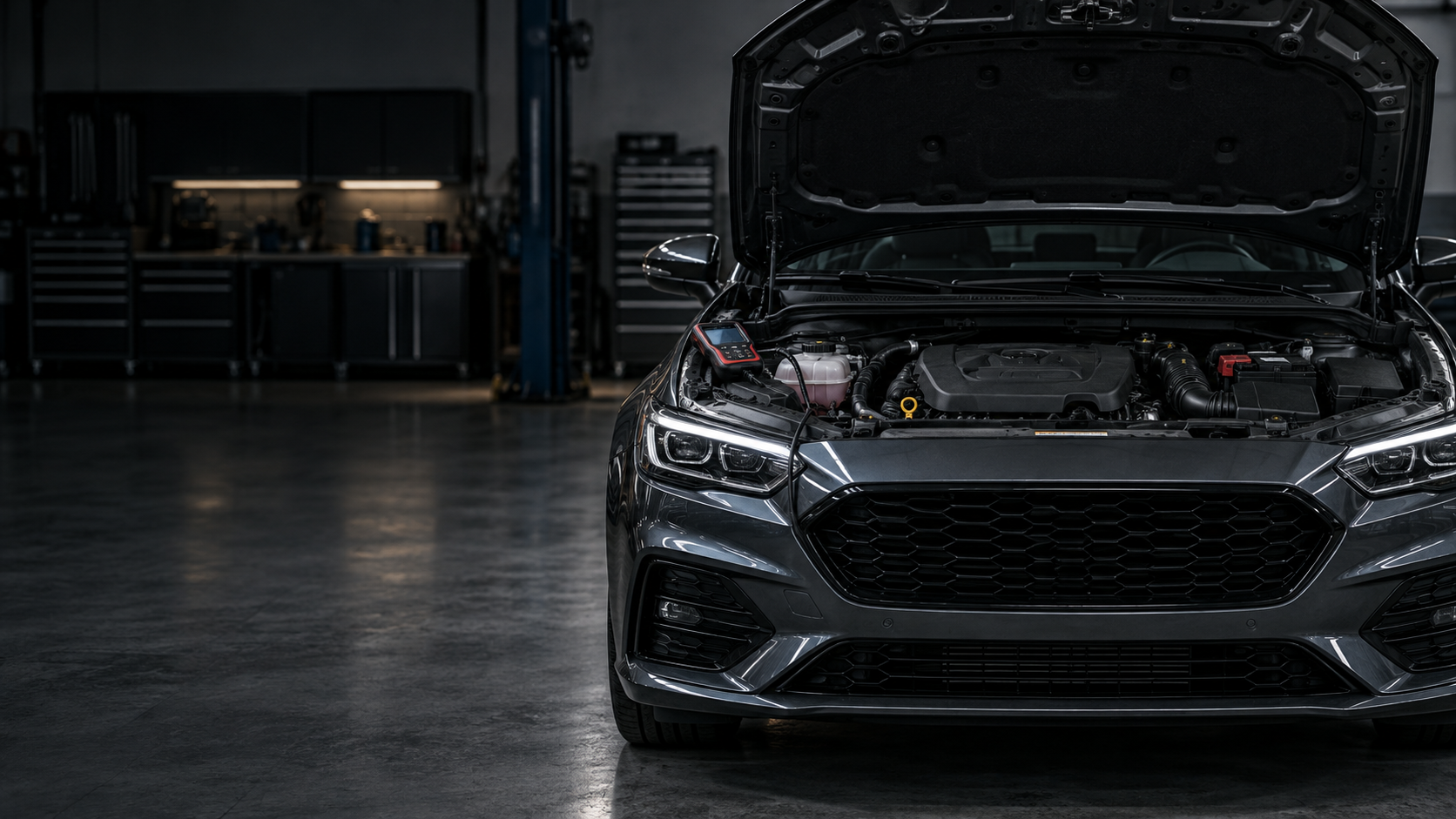
The problem is unclear
DON’T GUESS AT THE PART.NOTICE THE PATTERN.
A warning light is useful, but the story around it can be just as important. The goal is not for you to diagnose the car. It is to give J&T a useful place to begin.
Cold start, after sitting, highway speed, after rain, under load or only once in a while.
Note the warning light or message. A photo can help if it disappears later.
Weak starts, recent work, fluid loss or another symptom that arrived around the same time.
A useful diagnostic story
ONE SYMPTOM IS A CLUE.A PATTERN ADDS CONTEXT.
You do not need a trouble code or repair name before calling. Describe what the vehicle does in your own words.
Describe What Changed7:10COLD STARTRough for 20 seconds
7:35DRIVINGRuns normally
5:20AFTER WORKWarning light returns
NEXTJ&TStart with the pattern
What helps
BRING THE STORY.NOT A GUESS.
Specific observations help the conversation without asking you to become the mechanic.
Which warning appeared? Was it steady, flashing or temporary?
How often does it happen, and under what conditions?
What feels different from the way the vehicle normally behaves?
Diagnostics FAQ
BEFORE YOUSCHEDULE.
What makes a symptom useful for diagnostics?
Specific context helps: what the vehicle did, when it happened, how often it happens, and what else changed around the same time.
Does a warning light tell me exactly what is wrong?
Not necessarily. A warning light or code is a starting clue; the symptom and inspection provide the context needed to understand what is happening.
Do I need to know the trouble code?
No. If you have a code or photo of a warning message, bring it, but your description of the symptom is enough to begin the conversation.
Diagnostics
SOMETHING FEELS OFF?START WITH THE SYMPTOM.
A warning light, sound, smell, shake or no-start gives J&T a place to begin.